Schedule, theme and keynotes
Conference Theme:
Large language models and Free/Libre/open source software.
"I am not comfortable contributing to a project that extensively uses AI."
- from a post found in a pull request to a GitHub repository.
This year's LAC theme explores questions relating to the (sometimes uneasy) relationships that may emerge between LLMs and FLOSS. This of course has many dimensions, from the purely technical, through to the practical, and finally to the ethical. As code repositories such as GitHub roll out support for third-party and their own LLM agents, this is an area that needs vigorous discussion and assessment. It is probably not a good idea to ignore it, as it is unlikely to go away. It may be possible to formulate a position from the LAC community, which we might carry forward for further consideration in other forums. Even if such a thing cannot exist, it is still important that we put forward our ideas in relation to this issue. Therefore, it makes good sense to invite contributions to this theme and make it a central point of discussion at the LAC.
- The LAC2026 organising team.
Thursday 18/06, Morning
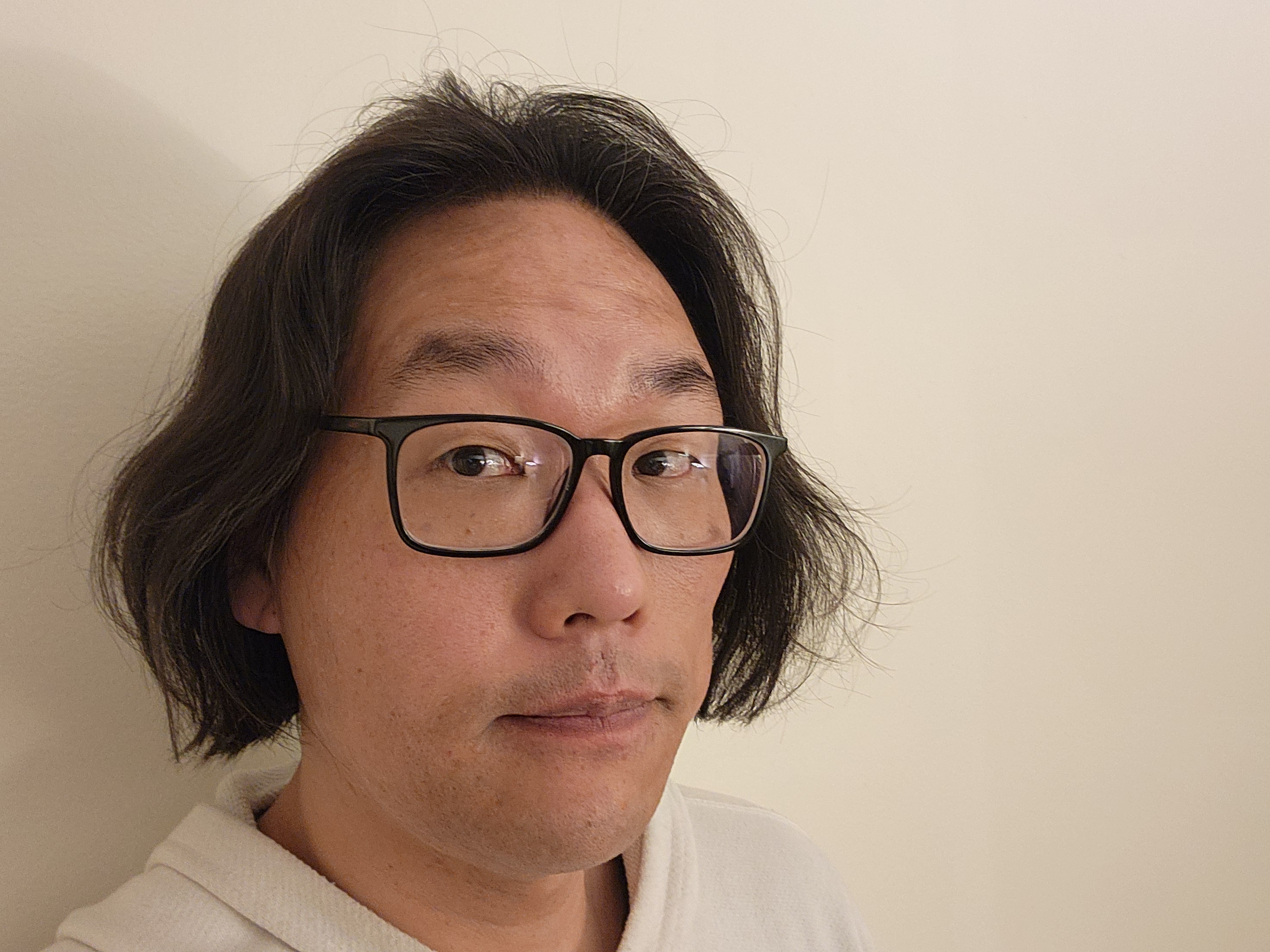
Steven Yi
Steven Yi is a composer, performer, and programmer that works on open source music technology and multimedia applications. He is one of the core developers of Csound, the author of the Blue music composition environment, and author of the csound-live-code live coding system.He is a long-time advocate and member of the Linux Audio community and looks forward to discussing this year's topic of LLMs and FLOSS at the LAC.
- Bewerunge Room, Ground floor, Logic house (comaps)
| Time | Who | What |
|---|---|---|
| 9:00 | Registration | |
| 9:15 | Coference opening ▷ | |
| 9:30 - 11:00 | Chair: Damien McEvoy | Session I : Spatial Audio |
| 9:30 | Lucian Parisi | An Open-Source Spatial Toolchain for Atmos transcoding and Layout-Agnostic Playback ▷ |
| 10:00 | Fares Schulz, Max Weidauer, Henrik Von Coler | SeamLess: Distributed Spatial Audio Rendering on the Linux Audio Stack ▷ |
| 10:30 | Simon Archipoff | Software frequency counter on standard hardware ▷ 🗐 |
| 11:00 | Break | |
| 11:30 | Steven Yi | Keynote I ▷ |
Thursday 18/06, Afternoon
- Bewerunge Room, Ground floor, Logic house (comaps)
| Time | Who | What |
|---|---|---|
| 14:00 - 15:30 | Chair: Steven Yi | Session II : LLMs |
| 14:00 | Richard Boulanger, Mateo Larrea | Dr. C: A Human-in-the-loop Agentic AI for Csound ▷ |
| 14:30 | Victor Lazzarini | Coding with Agents as a Means of Avoiding Windows ▷ |
| 15:00 | Aman Jagwani, Victor Lazzarini | Bare-metal Csound on Generic Prototyping Platforms ▷ |
| 15:30 | Break | |
| 16:00 - 17:00 | Chair: Simon Archipoff | Session III: FLOSS software development |
| 16:00 | Joel Jaffee | Leveraging WebAssembly as a Universal Distributable for Embedded Audio Applications ▷ |
| 16:30 | Fernando Lopez-Lezcano | Sooperloopy: Evolution of a Performance Mixer and Looper ▷ |
| 17:00 | Richard Boulanger | Workshop I : From Zero to Web-audio Csound-Powered Apps with Dr. C |
Thursday 18/06, Evening concerts
- Ground Floor, Riverstown hall (comaps)
| Time | Who | What |
|---|---|---|
| 19:30 | Chair : Iain McCurdy | Concert: Spatial Audio and Live Coding |
| Chris Arrell | Accretion Shock | |
| Jan Jacob Hofmann | Beyond Time | |
| Massimo Fragalà | VoceST III | |
| Jan Jacob Hofmann | Vatnajökull | |
| Niklas Reppel | Four Scenes for Fauna and Foleys | |
| Henrik Von Coler | Villeurbanne |
Friday 19/06, Morning
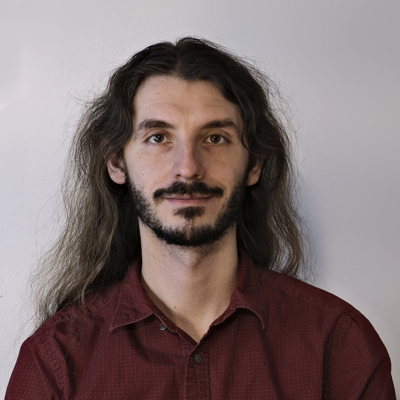
Jean-Michaël Celerier
Jean-Michaël, Director of Technological Development at the SAT in Montreal, has interest in art, code, and computer music. With a background in computer engineering and a PhD in multimedia, he develops a range of open-source software for digital art, including the ossia platform, for which he is the lead developer. He also has extensive teaching experience in digital creativity.
- Bewerunge Room, Ground floor, Logic house (comaps)
| Time | Who | What |
|---|---|---|
| 9:00 | Chair: Romain Michon | Session IV: AV Technologies |
| 9:00 | Harry von Haaren | Reflection on OpenAV Productions Software 🗐 ▷ |
| 9:30 | Nils Tonnätt | Implementing Milan-AVB in PipeWire ▷ |
| 10:00 | Simon Gapp | Building an Open Source Milan-AVB Ecosystem: Open Source Solutions for an Open Standard ▷ |
| 10:30 | Jeff Koftinoff | GPS-Disciplined AVB and Realtime Remote Audio Exchange: A Raspberry Pi 5 Implementation ▷ |
| 11:00 | Break | |
| 11:30 | Jean-Michaël Celerier | Keynote II 🗐 ▷ |
Friday 19/06, Afternoon
- Bewerunge and Gillen Rooms, Ground floor, Logic house (comaps)
| Time | Who | What |
|---|---|---|
| 12:30 | Tyler Kaufmann | Installation: Signal |
| 14:00 - 15:30 | Chair: Jean-Michaël Celerier | Session V : VR and Games |
| 14:00 | Ian Cecil Scott, Jamie Clarke, Sean Dunne, Gráinne Mulvey, Bryan Duggan | 3D Orchestration in Virtual Space: An Open-Source VR Environment for Spatial Music and Immersive Audio ▷ |
| 14:30 | Martin Pollow | A Python-Based Interactive Acoustic Impulse Response Measurement Tool ▷ |
| 15:00 | Vincent Reichenberg | An Asset-Based Approach To Reverse Engineering Games ▷ |
| 15:30 | Break | |
| 16:00 - 17:30 | Chair: Richard Boulanger | Session VI: FLOSS Applications |
| 16:00 | Giulio Gabrieli, Damon Berry, Julie Doyle, Harish Kambampati, Patricia Lucha Farina, Emma Murphy, Jonathan Turner, Dympna O'Sullivan | Privacy-Preserving Dementia Screening from Speech Using Language-Agnostic Acoustic Vocal Biomarkers ▷ |
| 16:30 | Tyler Kaufmann | Somatic Continuum ▷ |
| 17:00 | Joachim Heintz | Workshop II : Composing Self-Generative Structures in Csound ▷ |
Friday 19/06, Evening concerts
- Ground Floor, Riverstown hall (comaps)
| Time | Who | What |
|---|---|---|
| 19:30 | Chair : Gordon Delap | Concert: Live Electronics |
| Felippe Barros | ENGENHOCA: A FLOSS IMPROVISING MACHINE | |
| Richard Boulanger | CSOUND DREAMS – NEW MAYNOOTH (2026 PREMIERE) | |
| Malte Steiner, Tina Mariane Krogh Madsen | Occurences |
Saturday 20/06, Morning
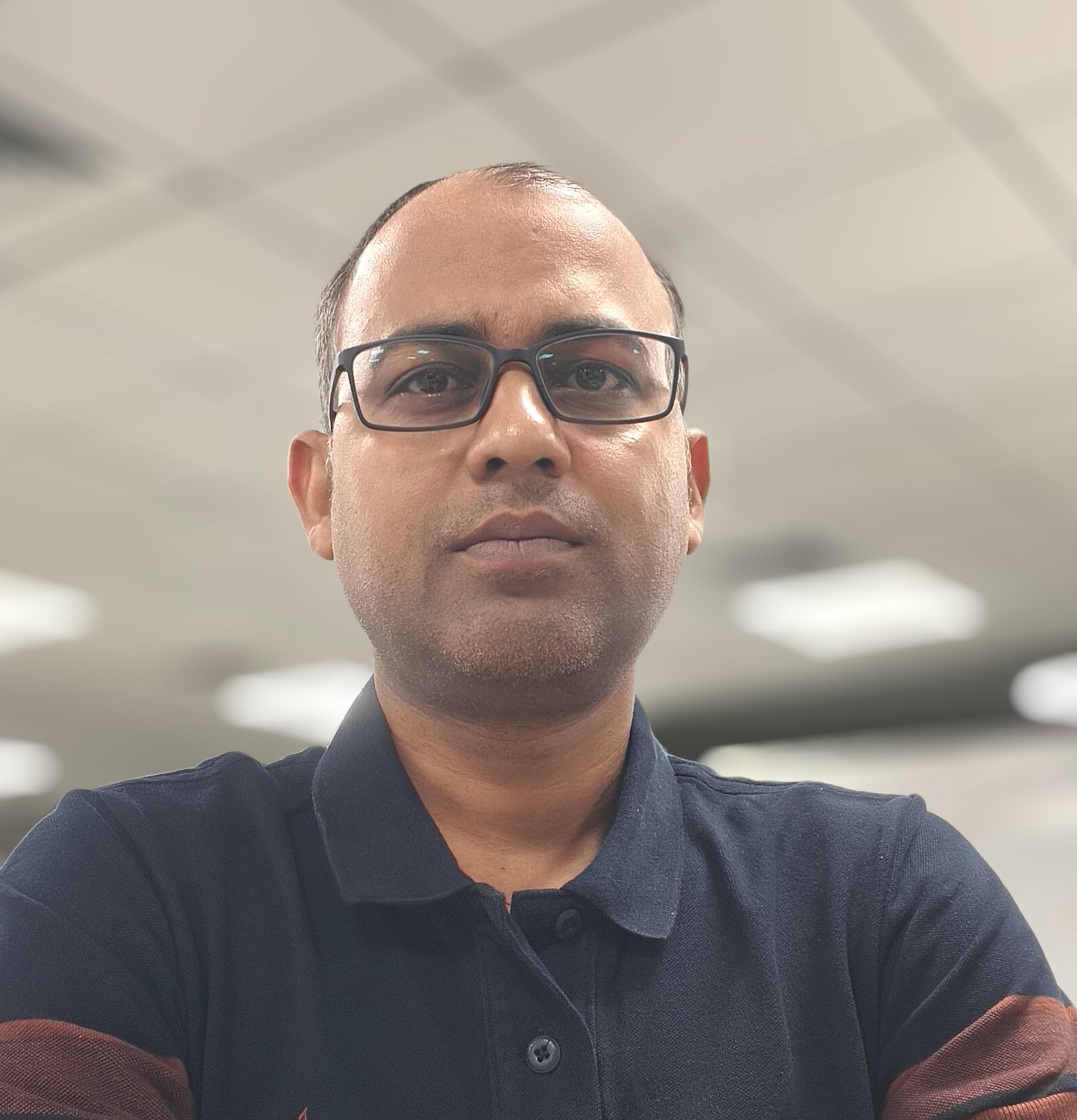
Vishnu Pratap Singh
Vishnu Pratap Singh is an embedded systems expert and engineering leader with nearly two decades of experience in Linux development, BSP, and Linux based product engineering for Audio devices, Communication devices, Satellite terminals, Smart devices, IoT, and pro-audio. He is currently driving Linux based Pro-Audio, DSP and open source analytics software development at Texas instruments.
- Bewerunge Room, Ground floor, Logic house (comaps)
| Time | Who | What |
|---|---|---|
| 9:30 : 11:00 | Chair: Jan-Jacob Hofmann | Session VI: Live Performance Applications |
| 9:30 | Nils Scheidweiler, Clemens Grelck | Using the Lemming Runtime System for Live Music Applications ▷ |
| 10:00 | Felippe Barros, Damián Keller, Leandro Costalonga, Victor Lazzarini | Predicting Sounds: a Preliminary Investigation of Source Code Comprehension for Beginners in Musical Programming ▷ |
| 10:30 | Damien McEvoy, Ziad Masri | TCP-MIDI - Positioning MIDI for a Secure Internet (demo) ▷ |
| 11:00 | Break | |
| 11:30 | Vishnu Singh | Keynote III ▷ |
Saturday 20/06, Afternoon
- Bewerunge Room, Ground floor, Logic house (comaps)
| Time | Who | What |
|---|---|---|
| 14:00 - 15:30 | Chair: Joachim Heintz | Session VII : Hardware and Software Systems |
| 14:00 | Matthias Rath, Matthias Geier | MINIMUM REQUIRED DELAY FOR REALTIME BLOCK SIZE ADAPTATION IN DIGITAL AUDIO SIGNAL PROCESSING ▷ |
| 14:30 | Sven Thielen, Christian Epe, Chris Chafe | Zero 2 WiFi IEM: Prototyping a Low-Latency Wi-Fi In-Ear Monitoring System Using Raspberry Pi and JackTrip ▷ |
| 15:00 | Romain Michon, Maxime Popoff, Pierre Cochard, Tanguy Risset | Towards Affordable FPGA-Based Spherical Speaker Arrays ▷ |
| 15:30 | Break | |
| 16:00 | Will Godfrey, Hemann Voßeler | Workshop III : Yoshimi, still fighting the Pink Robots ▷ |
| 17:15 | LAC committee meeting ▷ |
Modular night in Dublin
The Bloop Groop (Dublin modular community) also hosts an event that evening in Dublin. Anyone interested can find tickets here. The organisers invite LAC participants to purchase the 6 EUR option. Here is the itinerariy to get there from Maynooth.
If you are staying Sunday, a few of us will visit the Museum of Vintage Radio in Howth. It opens form 10 to 4, last guided tour at 3, and we are aiming for early afternoon. In Howth we can also do the cliff walk. The Summit inn is a good place for lunch right by the cliffs. Best way to get there from Maynooth is most likely to take the train to Connoly station, then the Dart (city train). Here is the itinirary. If you are staying in Dublin for the evening the Anseo pub often has good concerts upstairs.